
The Next Generation of Researchers Can't Afford to Wait
By Casey Koppelson, Last Mile Education Fund
We're at a moment when computing research touches almost every field imaginable, from astrophysics to public health to robotics, and yet the pipeline of people doing that work is under pressure from all sides. For undergraduate students navigating financial hardship, that pressure lands differently.
For a lot of students, a research experience can be one of the most formative experiences of their academic journey. It can be the first time they work on something that feels genuinely unsolved, like using computing to detect patterns in gun violence data, modeling the physics of distant galaxies, or figuring out how humans and robots can work alongside each other more naturally. REU students at institutions across the country have tackled exactly these kinds of questions, applying computer science to fields as varied as astrophysics, public health, and human-robot interaction. These are real problems, and undergraduates are helping solve them.
Beyond the work itself, research builds the skills that matter long-term: critical thinking, technical problem-solving, collaboration, and the confidence that comes from doing hard things. It opens doors to publications, conference presentations, and graduate school. Perhaps most importantly, it helps students figure out what kind of engineer, scientist, or innovator they want to become.
“As the first in my family to pursue graduate school, my primary reason for applying to an REU was to gain meaningful research experience and better understand what the day-to-day life of a graduate student looks like. I wanted mentorship and exposure to active research environments that could help me clarify my scientific interests, build confidence in my ability to contribute to research, and prepare me for the challenges of graduate training.”
The window of opportunity is narrow, and it doesn't stay open long.
The Financial Reality
An undergraduate summer research stipend typically pays somewhere between $5,000 and $8,000 for 10 weeks of full-time work, which works out to $12.50 - $20/hr. In most major cities, housing and food alone cost just as much, sometimes more. When staying home and picking up retail shifts actually covers next semester's tuition better than a research fellowship does, a lot of students make the practical choice. Not because they lack ambition or ability, but because survival has to come first.
Since 2022, Last Mile has been piloting and expanding a model to broaden participation in undergraduate research by providing supplemental support to students who would otherwise have to prioritize earning money for the upcoming school year. The theory is straightforward: for students from lower-income backgrounds to seriously consider graduate school, they need access to academic research during their undergraduate years. Stipends help, but they typically pay less than a student would earn staying home and working a retail job. By lowering the relative cost of participation, we enable a broader range of students to take part.
“The award helped me focus on my REU without worrying about basic needs like food, transportation, and medications. That kind of support made a real difference not just in my research experience, but in my confidence moving forward.”
“The award helped me focus on my REU without worrying about basic needs like food, transportation, and medications. That kind of support made a real difference not just in my research experience, but in my confidence moving forward.” - Last Mile REU Student
In 2025, the program served 52 students, with an average supplemental award of $3,843. The outcomes speak for themselves. 87.5% of respondents said they planned to apply to graduate school. 100% said their research experience influenced their decision to pursue a career in research.
Research on the Chopping Block
The proposed NSF budget for fiscal year 2027 would fund just 2,100 research grants, down from 5,800 in 2025. Entire scientific disciplines are looking at cuts of 63 to 75%. Those aren't just budget line items. They represent a generation of young researchers who won't get their start.
Philanthropy can't replace federal investment in research alone, but it can make sure that when opportunities do exist, more students have a real shot at them. Funding undergraduate researchers isn't charity. It's how we make sure the next breakthrough doesn't get left on the table because the person who would have made it couldn't afford the summer
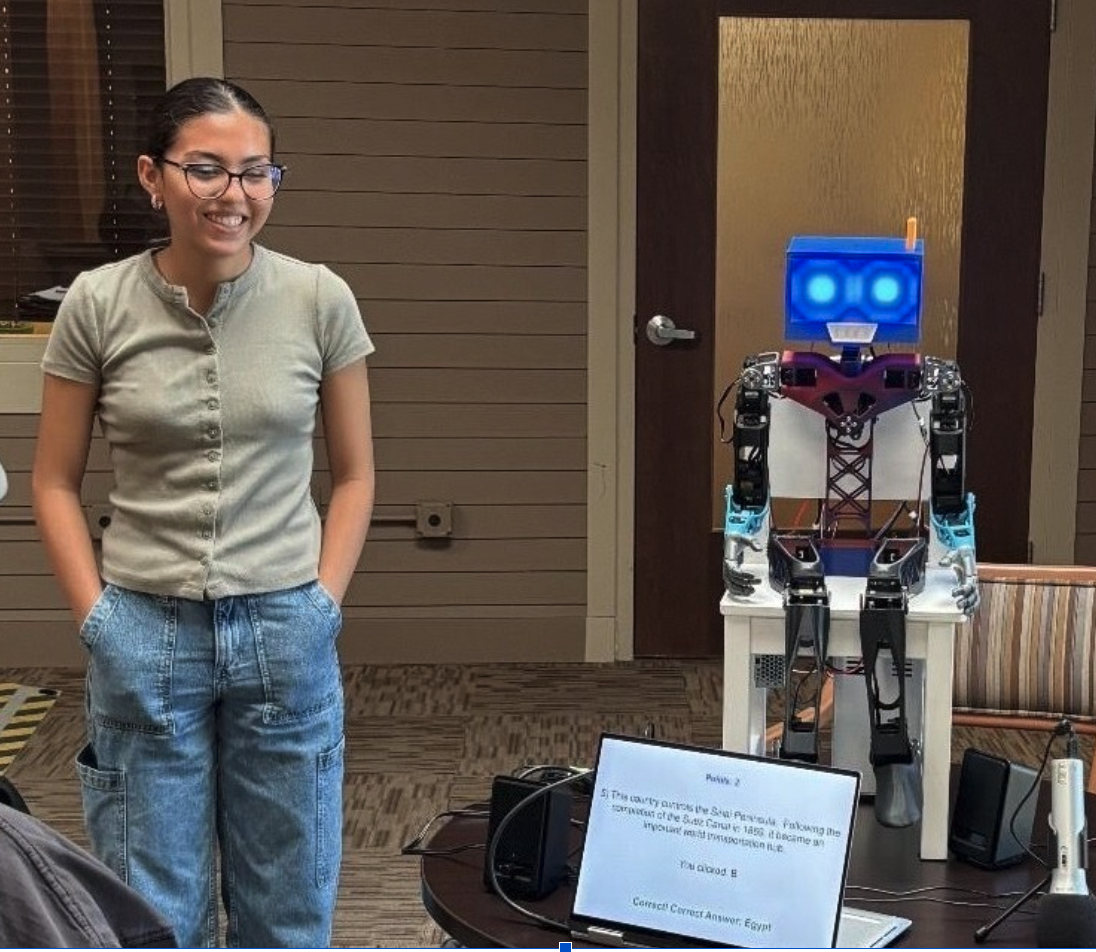
"The Last Mile Fund has been an integral part of my experiences as an undergraduate researcher. With their support, I've been able to explore areas such as Human-Robot Interaction at Oregon State University and remain enrolled at my home institution at the University of Texas Rio Grande Valley. As a result I am currently working as a swarm robotics research assistant at UTRGV under the MARS (Multiple Autonomous Robotic Systems) Lab!"
- Joanna G., Computer Science & Electrical Engineering, University of Texas Rio Grande Valley, '27
1 American Educational Research Association. President's FY 2027 budget request proposes deep cuts to education research and statistics. AERA Highlights. April 2026. Accessed May 6, 2026.https://www.aera.net/Newsroom/AERA-Highlights-E-newsletter/AERA-Highlights-April-2026/Presidents-FY-2027-Budget-Request-Proposes-Deep-Cuts-to-Education-Research-and-Statistics
2 Zhang C. Trump proposes deep research cuts, new icebreaker for NSF. FYI: Science Policy News. April 9, 2026. Accessed May 6, 2026.https://www.aip.org/fyi/trump-proposes-deep-research-cuts-new-icebreaker-for-nsf